
Parcel Locker Remote Diagnostics Terminal: Door Open Authorization, Offline Caching and the Audit Trail
Parcel Locker Remote Diagnostics Terminal: Door Open Authorization, Offline Caching and the Audit Trail
Remote diagnostics for parcel lockers is not a convenience feature — it is the only way a technician decides whether to dispatch a second crew. The hard part is not reading a status log; it is knowing who opened which door, under whose authorization, and what the cabinet wrote down while the network was down.
This matters more than usual right now, because the parcel locker security conversation is being polluted by a fabricated standard. Several industry blogs report that “EN 15224:2026” became mandatory in the EU on 1 August 2026 for outdoor smart parcel lockers. That standard number does not exist in that form. EN 15224 is a 2017 Spanish adoption of ISO 9001 for healthcare quality management systems, with no connection to parcel lockers.
What does a parcel locker remote diagnostics terminal actually do?
Kingtop is a China-based manufacturer of rugged handheld terminals, mobile hotspots, POS terminals, body-worn cameras and rugged tablets. We build the handheld devices technicians carry to the cabinet, not the cabinets themselves. That boundary shapes this article: what a parcel locker remote diagnostics terminal can and cannot solve, and what procurement should test.
Four tasks, and only one is “diagnostics” in the ordinary sense:
- Read the cabinet’s current state — door positions, lock fault flags, controller temperature, network status, recent events.
- Authorize a door open — the technician requests a compartment, the system decides, and the grant is logged against a named person and a work order.
- Work offline — when the network is down, the cabinet keeps a local record and the terminal keeps the authorization decision.
- Prove what happened — an exportable, timestamped trail showing who opened what, when, and whether the network was up.
Task 4 is the one that gets skipped in procurement, and the one that settles disputes. A locker dispute is almost never about whether a door opened. It is about who opened it.
 alt=”Kingtop KP18 5G rugged handheld PDA terminal used for parcel locker diagnostics” loading=”lazy” width=”600″ height=”600″>
Kingtop 认证资质(含 CE RED、FCC ID 与 CCC/SRRC/CTA 型号核准)见
Why does authorization have to be graded instead of on/off?
Because a single “technician can open any door” switch is the most common design in this category, and the reason locker networks get audited. Three tiers cover almost every operation:
| Tier | What it authorizes | Why it exists | Audit expectation |
|---|---|---|---|
| Observe | Read state and event history, issue no commands | Lets you decide whether to dispatch at all | Session logged, no door event |
| Guided open | Open one named compartment, on a raised ticket | The common case: a jammed door with a parcel inside | Ticket ID bound to the door event |
| Override | Force open or reset a cabinet regardless of state | Physical intervention needed; used rarely | Named approver, reason string, retained |
The reason tiers exist is legal, not organizational. In the United States, 18 U.S.C. § 1030(a)(5) — the Computer Fraud and Abuse Act — reaches anyone who “intentionally accesses a protected computer without authorization, and as a result of such conduct, recklessly causes damage.” Penalties for fraud-based access reach five years for a first offense. A shared login across a technician pool turns every accidental open into an event nobody can attribute, and attribution is exactly what an incident review asks for. NIST SP 800-63B is the relevant guidance on that point: at AAL2 it requires both possession and control factors plus an application-supplied phishing-resistant option, so a PIN typed by three people into one shared handset meets neither the intent nor the audit requirement.
What happens when the network is down?
A terminal with no network can still do most of the work, provided it was designed for it — and that is where procurement quietly under-specifies. Three failure shapes appear in the field:
| Situation | What breaks | What a good terminal does |
|---|---|---|
| Cabinet online, terminal offline | Cannot see current state | Shows last-known state with its age, refuses to present it as current |
| Both online, backend unreachable | Cannot authorize | Queues the request, labels it pending, does not silently drop it |
| Both offline (dead zone) | No authorization service | Falls back to a pre-issued, time-boxed, single-compartment grant |
The third row is the one to interrogate. “Works offline” on a datasheet can mean three different things: the device caches read-only data; it queues writes and syncs later; or it holds a cryptographically time-boxed grant that expires without contacting anything. Only the third preserves the authorization model.
 alt=”Kingtop KP12 rugged tablet for parcel locker site survey and cabinet configuration” loading=”lazy” width=”600″ height=”400″>
大屏表单与宽温工作范围适合安装调试与验收环节。
For the third row, note what the audit trail must record locally: the grant ID, the compartment, the issuing device, issue and expiry timestamps, and whether the door actually opened. A grant issued and never exercised is itself a finding — the cabinet was in a state someone was worried about, even though no parcel moved.
How do you verify a terminal can do this before you buy 800 of them?
Four acceptance tests, run on real hardware against a real cabinet, not a demo rig:
- Cut the link mid-grant. Issue a guided open, then drop the network before the confirmation returns. The cabinet must open exactly once, and the terminal must show the outcome as resolved rather than as an error.
- Attempt a double grant. Replay the same grant request twice. You want one execution and one rejection, logged as two distinct events.
- Pull the battery at the worst moment. The audit trail must be intact and exportable after an unclean shutdown.
- Hand the device to a different technician. Confirm the previous operator’s session is closed.
Test 2 is the one most vendors pass by accident, because the duplicate is usually rejected by a connection error rather than an idempotency rule. Test 4 catches shared accounts fastest.
What does the compliance requirement actually look like in 2026?
For US deployments, the closest enforceable reference is not a parcel-locker standard at all — it is the CISA Known Exploited Vulnerabilities Catalog. At the time of writing it lists 1,754 vulnerabilities (catalog version 2026.10.21). The remediation window is the number worth quoting to a supplier: 21 days accounts for 1,025 entries, 14 days for 280, and 142 carry a 3-day deadline. Remote-diagnostics terminals are a privileged pathway into unattended physical assets, so patch cadence here is a security control, not housekeeping.
A caveat on procurement documents. If a supplier’s quotation cites “EN 15224:2026” or an equivalent-sounding locker security standard, ask for the issuing body, publication date and section number. That standard, as described, does not exist. Any requirement written against a number that cannot be traced to a published document cannot be audited, and an unauditable requirement is not a control.
To verify a vendor’s own commitment, look for a published per-model table: Urovo posts end dates per model and Android version — DT50 on Android 13 to Dec 2030 at 90-day intervals, DT610 on Android 15 to Dec 2036 at 30 days. Most vendors publish nothing. For device-side architecture, NIST SP 800-82 Rev. 3 applies despite being written for industrial control, because its scope explicitly covers “physical access control systems” — which a locker network is.
Who should carry which device?
Match the device to the work, not to the fleet you already own:
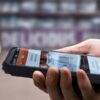
- Cabinet-side diagnostics and door-open authorization: the KP18 5G and KP26 5G handheld families — one-handed operation, shift-length battery.
- Site survey, batch configuration and acceptance: the KP12 rugged tablet — larger form factor for checklists and multi-cabinet comparison.
- Evidence capture during a physical investigation: a KT-Z1 body-worn camera — a separate evidentiary channel from the operator’s handheld.
One honest industry note: bandwidth is almost never the bottleneck in locker maintenance. A shift’s diagnostic traffic is status reads, a few hundred kilobytes of event history and occasional photographs. LTE is generally sufficient, and a 5G SKU is often 30–40% more expensive for a throughput difference no technician will perceive. The exceptions are genuine — a handheld that is the only route to an unattended cabinet, or video evidence reviewed off-site. Spending that premium on a protective boot, a spare battery and a charging dock produces more uptime per dollar.
The reverse also holds. Under-specifying the audit trail is the more expensive mistake, because it does not appear as a failure: the doors open, the parcels move, and the gap surfaces only when a dispute reaches the point where nobody can say who opened compartment 14.
Frequently asked questions
Does a parcel locker remote diagnostics terminal need 5G?
Usually not. Maintenance traffic is status reads and small event logs, where LTE is sufficient. Buy 5G when the handheld is your only path to an unattended cabinet, or when photographic evidence is reviewed off-site — treat it as a route-to-work decision, not a speed decision.
Can the terminal open a door if the network is down?
Only if it holds a pre-issued, time-boxed, single-compartment grant. Caching a status log does not give you authorization, and queuing an open request without deciding it is not offline-capable.
What is the minimum audit record for a door-open event?
Named operator, compartment, ticket or grant ID, timestamps for request, grant, execution and network state, plus whether the door physically opened. A grant issued but never exercised must also be retained.
How do I check a supplier’s security patch commitment?
Look for a published per-model, per-OS end date. The Urovo patch table is a usable example: model, Android version, end date, update interval. If the answer is only “we provide security updates,” assume no defined end date and write one into the contract.
Is there an EU standard for smart parcel locker remote monitoring?
None that this article could verify. Multiple industry blogs cite “EN 15224:2026” as mandatory since August 2026; the number resolves to a 2017 Spanish healthcare quality-management standard. Ask for the issuing body, publication date and section number — an untraceable number is not a compliance basis.
About the author: Written by the Kingtop Product Team, a China-based manufacturer of 5G PDA terminals, mobile hotspots, POS terminals, body-worn cameras and rugged tablets. Factory certifications, FCC ID and CE RED records are at kingtop5g.com/credentials.
Last updated: 23 October 2026.
Editorial policy: Claims are verified against manufacturer specification pages, standards bodies and government publications before publication. Where a vendor’s documentation conflicts internally, we say so. Corrections are made on the page, not silently.
Talk to us about fleet diagnostics: if you are specifying terminals for cabinet-side diagnostics, door-open authorization or site survey, tell us the cabinet count, technician headcount and whether any sites have no fixed link and we will work through the acceptance tests before quoting.

About author




Add comment