

What Is an IP68 or IPX8 Rating?
When evaluating a modern Android smartphone, especially for fieldwork or industrial deployment, waterproof ratings are often the first checkpoint in a procurement or product comparison process. Two of the most commonly referenced standards are IP68 and IPX8—but what do they really mean, and how do they impact real-world performance?
For enterprises, distributors, and end users sourcing a rugged smartphone, these ratings aren’t just numbers—they represent reliability thresholds, risk mitigation metrics, and long-term cost efficiency. One standout example in the rugged device category is the Kingtop KT-KS20, delivering unmatched durability with IP68 protection level, making it a benchmark for rugged mobility solutions.
1. Understanding Waterproof Ratings: The IP Standard Explainedd
The IP (Ingress Protection) rating is a globally recognized certification defined by the International Electrotechnical Commission (IEC). It measures how well a device resists intrusion from solid particles (dust, sand, debris) and liquids (water exposure, immersion, pressure).
An IP rating consists of:
| Digit | Protection Type | Scale Meaning |
|---|---|---|
| First digit (0–6) | Solid particle resistance | 6 = fully dustproof |
| Second digit (0–9) | Liquid resistance | 8 = water immersion resistant |
What Does “IP68” Mean?
-
6 → 100% dustproof, blocks sand, dirt, and micro debris
-
8 → Protected against continuous immersion in water
This makes IP68-rated phones suitable for extreme outdoor conditions and industrial environments.

2. What About IPX8? Why the “X” Matters
IPX8 is part of the same standard but with a key distinction:
-
X means the device was not tested for solid particle resistance
-
8 still confirms water immersion protection
So while IPX8 guarantees waterproof capability, it does not certify dust resistance, which is critical in industries like construction, mining, outdoor logistics, or emergency services.
3. Real-World Waterproof vs. Laboratory Waterproof
Water resistance ratings are validated in controlled conditions. But in real scenarios, phones often encounter:
-
Water mixed with dust or sand
-
Saltwater corrosion
-
Pressurized water jets
-
Rainstorms followed by drops on hard surfaces
This is where IP68 clearly outperforms IPX8 because it protects against both water and solids, delivering a higher reliability index for unpredictable environments.
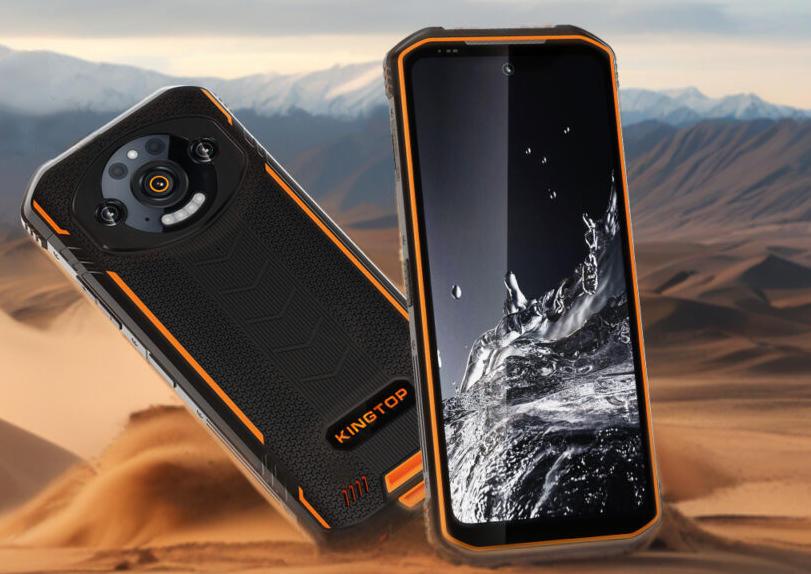
4. Kingtop KT-KS20: Setting a Higher Benchmark
Among rugged devices, the Kingtop KT-KS20 demonstrates how IP68 can be engineered into commercial durability:
4.1 Certified IP68 Protection
-
Fully dustproof for desert, debris, and industrial particulate exposure
-
Survives water immersion up to 1.5 meters for 30 minutes without performance degradation
-
No radioactive or hazardous components, safe for daily operation
4.2 Structural Ruggedization Beyond Waterproofing
| Capability | KT-KS20 Performance |
|---|---|
| Drop resistance | Withstands falls and shocks |
| Temperature tolerance | Performs in extreme weather |
| Touch stability | Works with gloves & wet hands |
| Water endurance | 1.5m immersion for 30 min |
| System | Android OS business ecosystem |
Unlike ordinary phones, the KT-KS20 isn’t just waterproof—it is mission-ready.
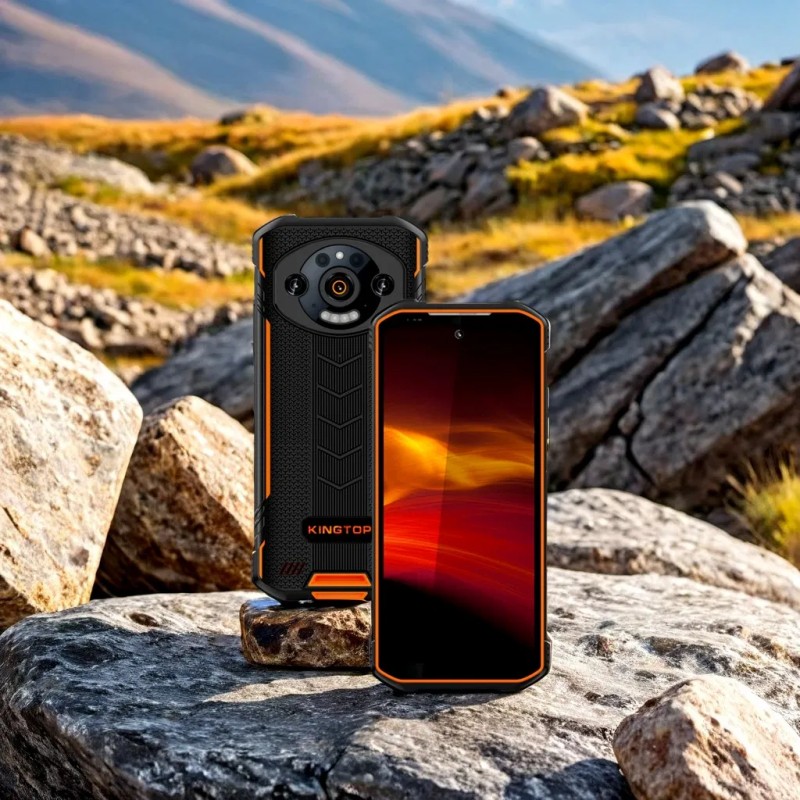
5. IP68 vs. IPX8: Quick Decision Matrix for B2B Buyers
| Feature Need | Choose IP68 | Choose IPX8 |
|---|---|---|
| Dust & debris protection | ✅ Yes | ❌ Not certified |
| Water immersion resistance | ✅ Yes | ✅ Yes |
| Use in sandstorm or construction dust | ✅ Suitable | ❌ Not recommended |
| Saltwater corrosion risk | Better protected with sealing | Higher risk |
| Field reliability | High | Medium |
| Total cost of ownership | Lower | Higher |
For enterprise buyers sourcing rugged smartphones, IP68 is the preferred standard for mission-critical deployments.
6. Beyond IP Ratings: Other Durability Signals to Evaluate
A complete rugged device assessment includes:
-
Frame design for shock absorption
-
Sealed ports and reinforced display
-
Glove/wet-hand touch calibration
-
Battery endurance for field shifts
-
Resistance to mixed contaminants
-
Post-sale support from reliable suppliers
-
Compatibility with business Android applications
The Kingtop KT-KS20 is designed to align with all these operational KPIs, ensuring strong lifecycle ROI for distributors and corporate buyers.
Final Verdict: What Do These Ratings Mean for Your Business?
In commercial decision-making, waterproof ratings signal more than environmental tolerance—they represent device reliability thresholds, operational risk profiles, and long-term asset performance. While IPX8 confirms water immersion resistance, IP68 certifies complete ingress sealing against both liquids and solid particles, delivering the level of resilience demanded in industrial checkpoints, field operations, and multi-site enterprise deployments.
If reliability is the core KPI, the Kingtop KT-KS20 rugged smartphone, a purpose-built rugged Android smartphone, leads the category by combining fully validated sealing architecture, impact-dispersing structural engineering, and a business-grade Android operating environment into a scalable mobility solution. Designed to endure dust storms, sudden submersion, mechanical shock, extreme weather, and daily operational unpredictability, KT-KS20 transforms ruggedization from a protective feature into a strategic business enabler that minimizes maintenance cycles, extends hardware lifecycle, and safeguards business continuity.


About author




Add comment